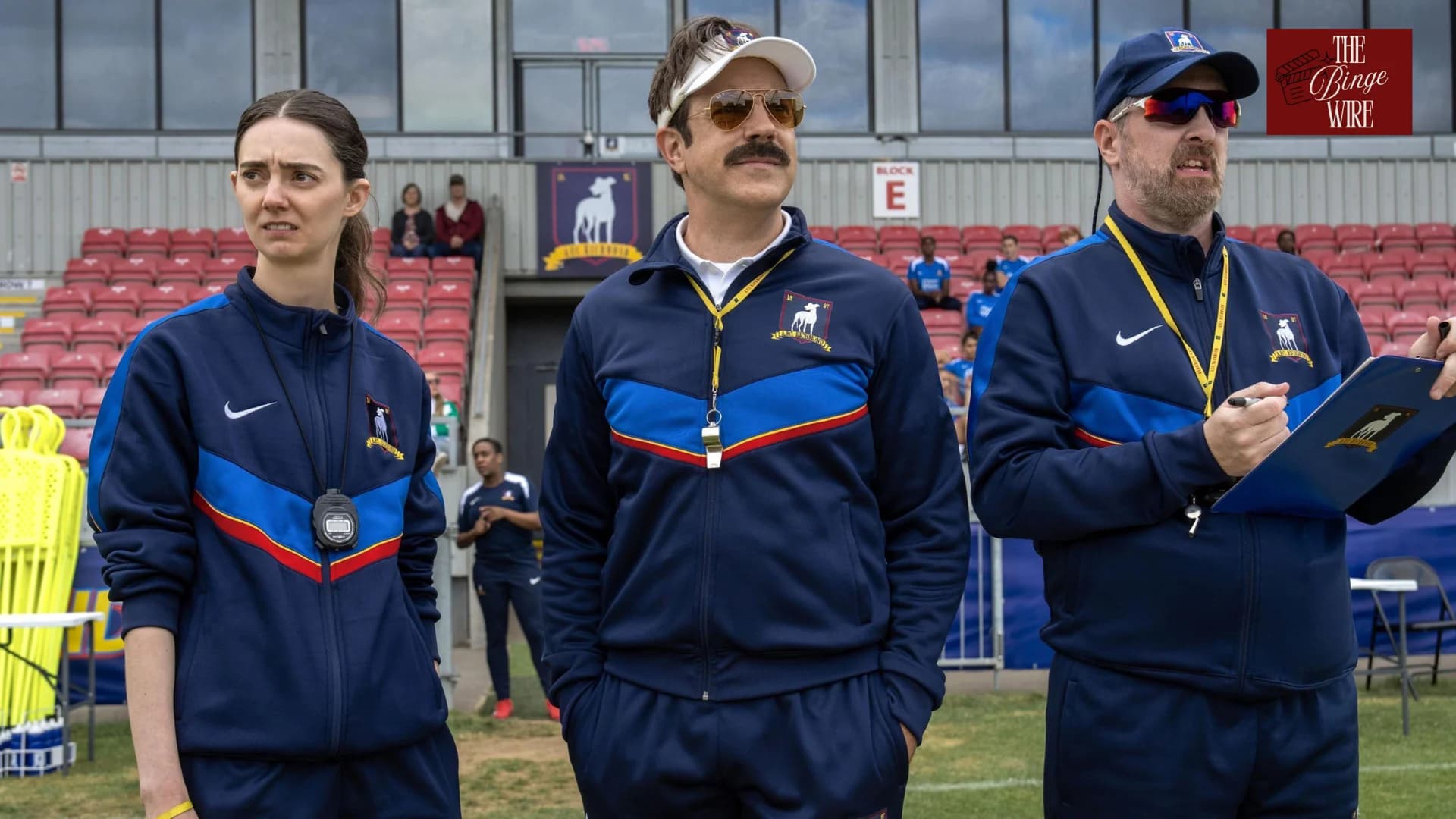
I am currently somewhere in the middle of Season 3 of Ted Lasso, and there is something rather unexpected about the experience: I am not really a football fan. Yet, here I am, completely invested in AFC Richmond, its players, coaches, owners and, more importantly, the people behind all those characters.
With Ted Lasso Season 4 taking the story in a new direction, I find myself thinking about what made me fall in love with this show in the first place. For me, it was never really about football. It was about people, relationships, second chances and the strange, complicated ways in which people change.
It Was Never Really About Football
At first glance, Ted Lasso looks like a show about football. But somewhere between Ted's relentless optimism, Roy Kent's grumpiness, Jamie Tartt's ego and Rebecca Welton's complicated journey, football almost becomes the backdrop rather than the main character.
What keeps me watching is the way the show allows its characters to change. Nobody remains exactly the person we meet in the first episode. And that change never feels forced. It feels like the result of everything they have experienced along the way.
Jamie Tartt is perhaps the clearest example. He begins as someone you may love to dislike arrogant, self-centred and convinced that he is the most important person in every room. But watching him gradually become a better teammate and a more self-aware person is one of the most satisfying parts of the show.
Ted and Coach Beard: A Friendship That Quietly Holds the Show Together
And then there is Ted himself the person around whom this entire world seems to revolve.
Ted's optimism can sometimes feel almost unreal, but what makes him interesting is that beneath the jokes, kindness and endless supply of motivational quotes is a complicated human being. His own struggles remind us that being positive does not mean you are unaffected by pain.
But Ted would not quite be Ted without Coach Beard.
Their friendship is one of my favourite parts of the show precisely because it does not need to constantly explain itself. Beard is the quiet, eccentric and often mysterious counterbalance to Ted's outgoing personality. Where Ted fills the room with words, Beard often says very little. Yet, somehow, they understand each other.
They arrive at Richmond together, and Beard remains one of the few people who knows Ted beyond the cheerful persona everyone else sees. Their friendship feels lived-in like two people who have been through enough together that they don't need to explain every thought or emotion.
There is also something wonderfully unconventional about their partnership. Ted may be the face of the coaching team, but Beard has his own way of seeing the game and the people around him. Together, they show that friendship does not always have to look or sound the same to be meaningful.
From Nate to Keeley, Everyone Gets Their Own Story
What I particularly love about Ted Lasso is that it does not treat its supporting characters like supporting characters.
Nate's transformation, Keeley's journey, Rebecca's evolution, Roy's emotional walls and Jamie's growth all receive room to breathe. Even when Ted is not at the centre of a storyline, the show remains interesting because these characters have lives, insecurities and ambitions of their own.
Keeley, for instance, is not simply someone's girlfriend or a romantic connection between two characters. Rebecca is not merely the club owner. Jamie is not merely the star footballer. Nate is not simply the assistant coach who changes sides. And Beard is not simply "Ted's friend."
Each character is allowed to become their own individual.
That is perhaps what makes the show feel so warm. It gives importance to people who, in another series, might have existed only to move the protagonist's story forward.
What Season 4 Changes
Season 4 takes Ted back into the world of football, but this time the focus shifts to a second-division women's football team. That immediately makes the new season interesting because it gives the show an opportunity to do what it has always done best: introduce us to people and slowly make us care about them.
But it also creates a challenge.
The original seasons spent years building our emotional connection with Ted, Rebecca, Keeley, Roy, Jamie, Beard and the rest of Richmond. A new women's team means beginning that emotional journey again.
The question isn't simply whether the football will be interesting. It is whether these new characters will become people we genuinely care about.
Could India Make Its Own Ted Lasso?
This is where the show becomes particularly interesting from an Indian OTT perspective.
India has plenty of sports dramas, but many of them are built around the familiar formula of struggle, training, competition and eventual victory. There is still space for a sports series that is primarily about people rather than trophies.
An Indian show inspired by the emotional approach of Ted Lasso wouldn't necessarily have to be about cricket. It could explore football, hockey, kabaddi or even a women's sporting team. The sport could simply become the environment in which stories about friendship, ambition, failure, ego, family and second chances unfold.
And women's football could be particularly interesting territory because it remains a space with plenty of stories yet to be told on mainstream Indian screens.
Would It Work With Indian Audiences?
The interesting question isn't whether India needs an Indian Ted Lasso. It is whether Indian audiences would connect with a sports show where the sport is only one part of the story.
I think the answer would depend on the characters.
Give us a coach who isn't perfect. Give us players with completely different personalities. Give us the ambitious one, the insecure one, the veteran who thinks their time is over, the youngster desperate to prove themselves and the person who never believed they belonged there.
Give us friendships like Ted and Beard's relationships that feel genuine rather than written simply to serve the plot.
Most importantly, give every character a reason to matter.
Because that is what Ted Lasso has taught me while I have watched it, you don't necessarily need to love football to love a football show. You just need to care about the people standing on the pitch.