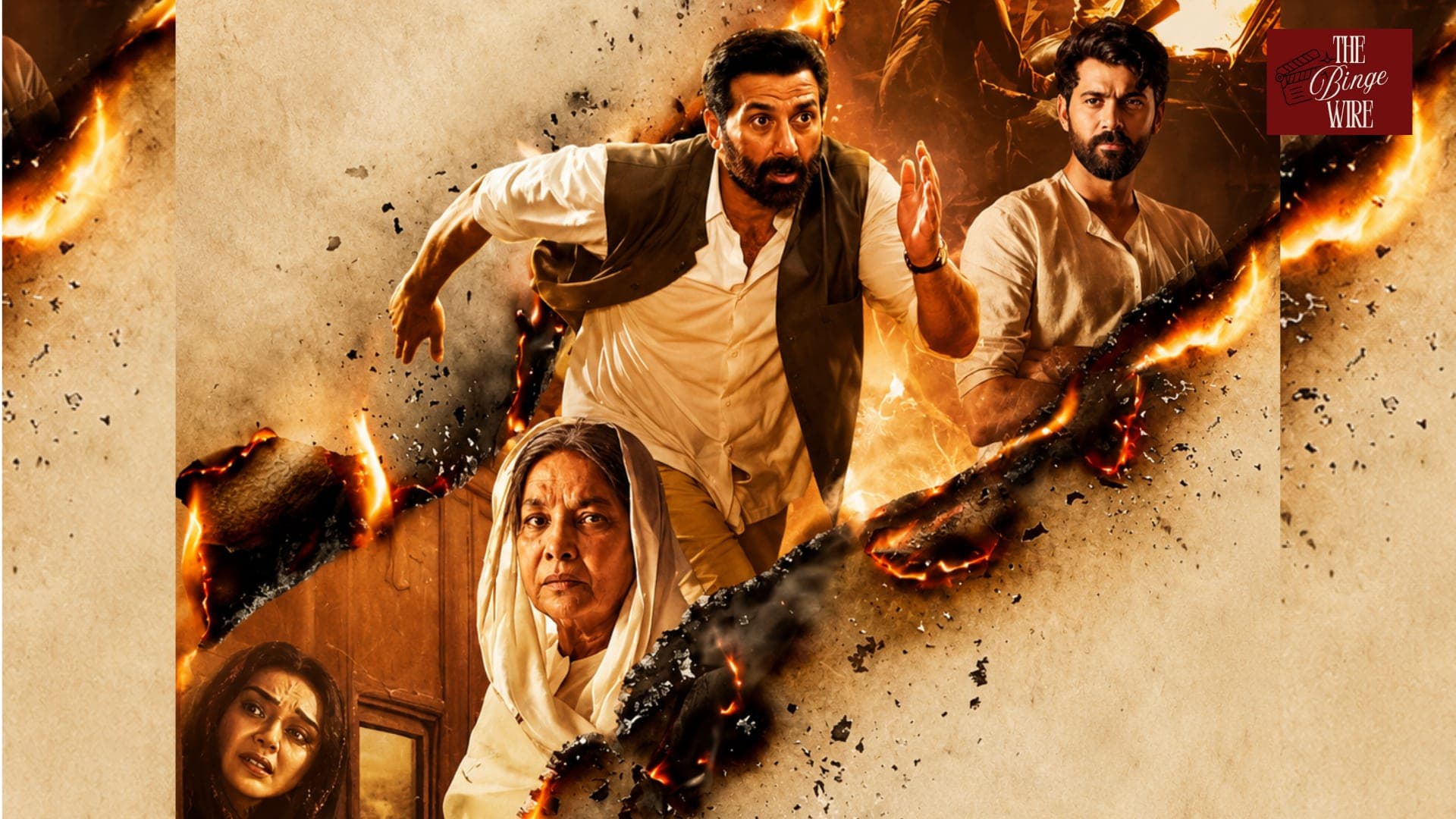
The teaser of Batwara 1947, starring Sunny Deol and Preity Zinta, has finally arrived, but instead of excitement, it raises one obvious question: why is Bollywood serving us with the same Partition narrative over and over again?
From the very first glimpse, the film evokes memories of Gadar and Gadar 2; the same larger-than-life hero, the same chaos of 1947, the same desperate fight to protect family, and the same hyper-nationalistic action sequences. It feels less like a fresh cinematic experience and more like a familiar formula being repackaged for the audience.
As someone who genuinely loves Hindi cinema and appreciates stories rooted in history, I find myself increasingly exhausted by the industry's repeated return to the same template. At what point does revisiting history become recycling history?
History Deserves Better Than Formula Filmmaking
There is absolutely no denying that the Partition of India remains one of the most tragic and defining moments in the country's history. Millions were displaced, families were torn apart, and countless lives were lost. Cinema has every right and perhaps even the responsibility to tell those stories so younger generations understand the pain and sacrifices of the past.
But there is a difference between preserving history and commercializing it.
When every Partition film follows the same blueprint of violence, revenge, separation, and a heroic savior, the tragedy becomes a backdrop for mass entertainment rather than meaningful storytelling. The emotional complexity of one of history's darkest chapters is reduced to predictable action sequences and loud patriotic moments.
The Gadar Shadow Is Impossible to Ignore
Sunny Deol's image is already synonymous with Gadar. His larger-than-life persona, powerful dialogues, and one-man-army action made the franchise a massive success.
That is exactly why Batwara 1947 struggles to establish its own identity.
The teaser doesn't introduce a new perspective or an unexplored narrative. Instead, it offers the same visual language riots, chaos, divided families, and Sunny Deol taking on impossible odds single-handedly. Rather than feeling like a new film, it feels like another extension of a formula that has already delivered two blockbusters.
When Familiarity Stops Being Nostalgia
Recently, Imtiaz Ali's Main Vaapas Aunga also explored the Partition era, but it attempted to differentiate itself by placing a love story at its core. Whether audiences connected with it or not, the film at least tried to offer a different emotional lens.
Batwara 1947, however, appears to be leaning heavily on nostalgia and the tried-and-tested action-drama formula. That may work at the box office, but it raises a larger question about Bollywood's creative confidence.
Why revisit the same chapter if there is nothing new to say?
Bollywood Has More Stories Than This
India's history is vast. Its literature is rich. Its regional folklore, biographies, political movements, scientific achievements, sports journeys, and social revolutions provide endless opportunities for original storytelling.
Yet mainstream cinema repeatedly returns to the same historical events because they come with built-in emotional appeal and commercial security. The result is an industry that often chooses familiarity over innovation.
Audiences deserve films that surprise them, challenge them, and introduce them to stories they have never seen before not endless variations of narratives they already know by heart.
Editor's take: It's Time to Move Beyond Recycled Patriotism
Partition stories will always have a place in Indian cinema because they document a painful reality that should never be forgotten. But remembering history does not mean recreating the same cinematic formula every few years.
If Batwara 1947 ultimately offers a fresh perspective, it will earn its place. But based on the teaser, it feels more like another attempt to capitalize on nostalgia than to expand the conversation.
Bollywood doesn't have a shortage of stories it has a shortage of risk-taking. And until filmmakers stop relying on recycled patriotism and familiar historical formulas, audiences will continue asking the same question every time a new teaser drops: How many times is too many times?