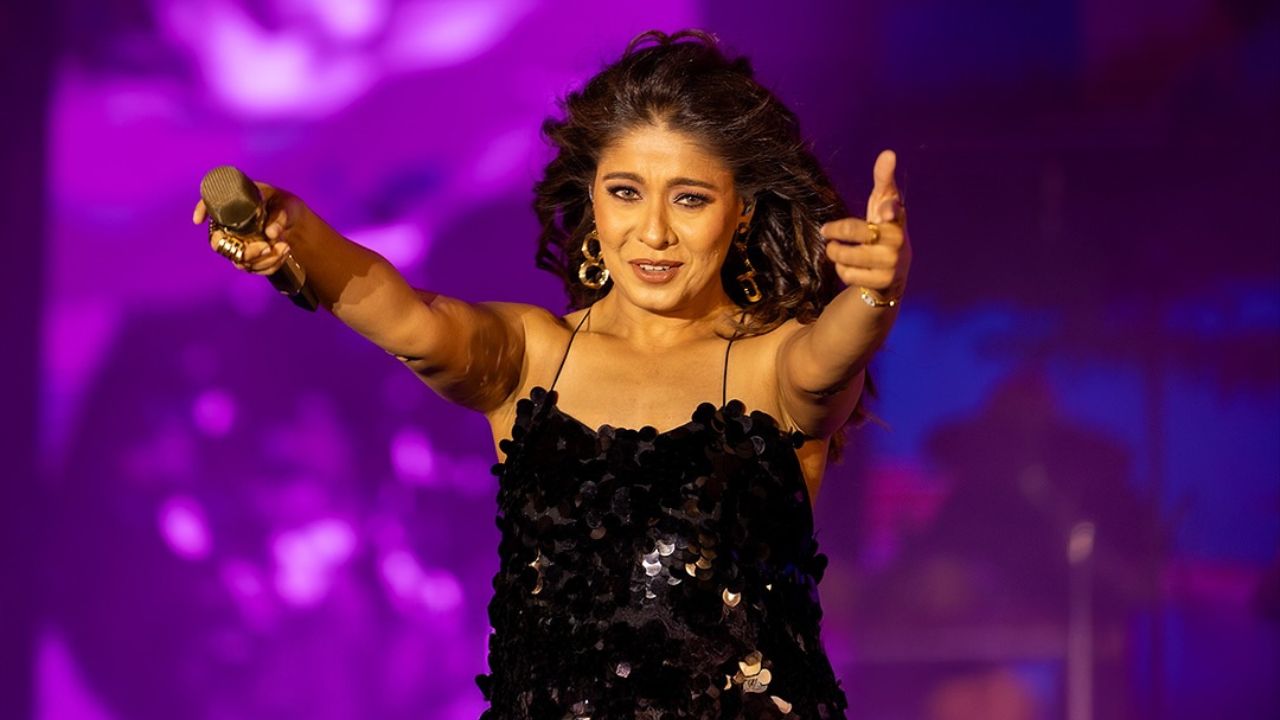
Sunidhi Chauhan as performer: Have you witnessed Sunidhi Chauhan live concert? If not, then you need to add this into your bucket list for sure. The moment Sunidhi Chauhan walks onto a stage, something shifts. It’s not just another concert, not just another playback singer revisiting familiar hits. There’s a sense of anticipation because with her, you know the performance is going to be as much about what you see as what you hear.
That’s what makes her stand apart. She doesn’t treat the stage as a place to simply sing; she treats it as a space to perform, to move, to connect, and to transform songs into experiences.
Sunidhi Chauhan has surely rewritten what Indian audiences really expect from live concerts.
Journey Began Early
Long before the high-energy concerts and viral performance clips, Sunidhi was a young girl in Delhi with an unmistakable love for music. She began singing at the age of four, guided by her mother and driven by instinct. A turning point came when actress Tabassum recognized her talent and encouraged her family to move to Mumbai.
 That move opened doors to the film industry, where Sunidhi would go on to build a remarkable career not just as a playback singer, but as a voice that could adapt, evolve, and stand out across genres.
Building a New Kind of Concert Experience
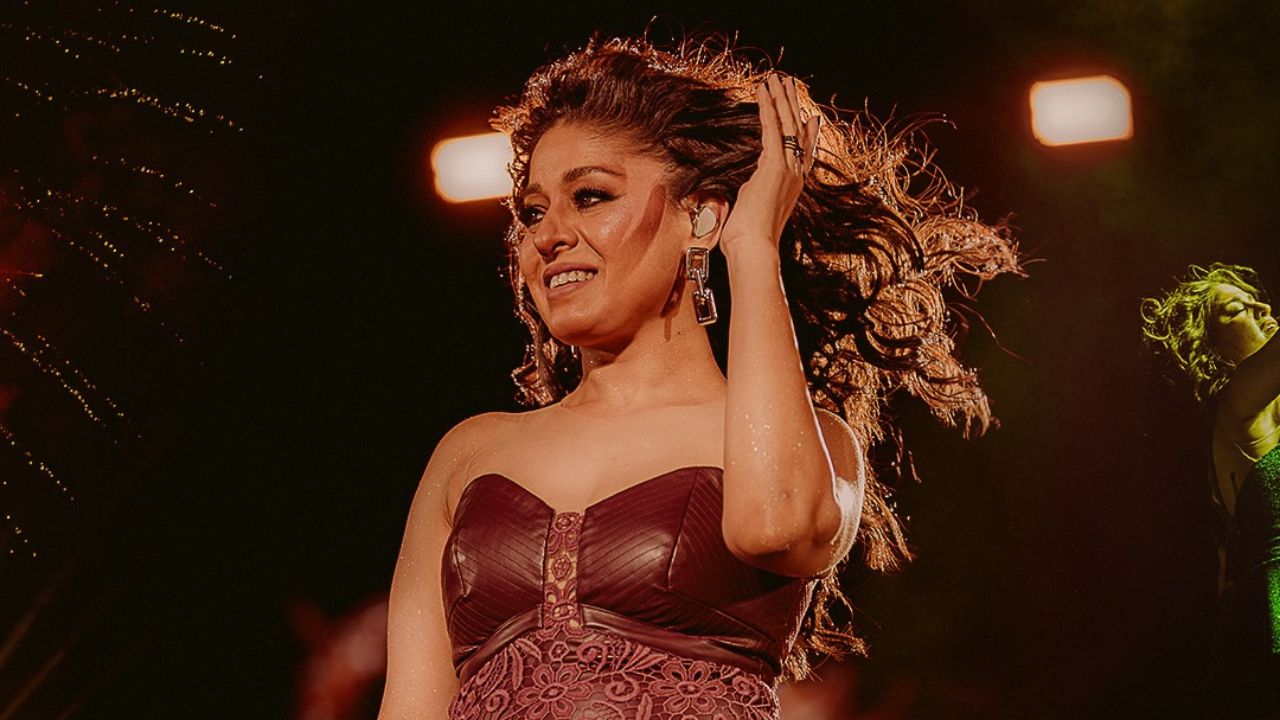
What sets a Sunidhi Chauhan concert apart is its scale and energy. There’s music, of course but also choreography, dramatic lighting, bold styling, and a level of physicality that’s rare among playback singers.
She doesn’t stay rooted to one spot. She moves across the stage, dances with precision, and engages the audience with a confidence that feels effortless. The result is a performance that feels closer to a global pop show than a traditional Indian concert.
This evolution matters. For years, Indian live music especially from playback artists was centered almost entirely around vocal delivery. Sunidhi expanded that definition, proving that a singer can be both vocally powerful and visually captivating.
Voice That Covers Every Mood
With more than 1,200 songs to her name, Sunidhi’s versatility remains one of her greatest strengths. She has delivered some of Bollywood’s most unforgettable high-energy tracks Beedi” from Omkara, “Sheila Ki Jawani” from Tees Maar Khan, and “Kamli” from Dhoom 3. At the same time, she brings emotional depth to softer songs like “Tu Hi Hai” from Dear Zindagi and “Darkhaast” from Shivaay. Her range stretches effortlessly from the pop energy of “Desi Girl” (Dostana) to the haunting intensity of “Tu Kuja” (Highway).

Work Behind the Performance
What audiences see on stage is only part of the story. Behind the high-energy performances lies discipline and relentless training. After becoming a mother, Sunidhi worked hard to rebuild her fitness and stamina. She trained herself to dance in heels and, more importantly, to sing live while executing demanding choreography.
Many global performers rely on lip-syncing during intense routines, but Sunidhi continues to deliver live vocals without compromising on movement or energy.
Redefining Expectations
There’s also a sense of joy in her performances that’s hard to miss. Whether it’s in her expressions, her movement, or the way she engages with the crowd, she brings an enthusiasm that feels genuine and infectious.
There is no doubt that, Sunidhi Chauhan is setting a new benchmark. She’s proving that Indian artists can deliver shows that are just as dynamic and visually engaging as international acts while staying rooted in their own musical identity. Her journey also challenges industry norms. As a female artist in her forties, she continues to command massive stages with energy and authority, without being framed as a nostalgia act.
 Comparisons to artists like Shakira or Taylor Swift are often made, but they miss the larger point. Sunidhi Chauhan’s rise is uniquely her own built within an industry that traditionally prioritized voices over performers.
Changing the Rules of the Game
Sunidhi Chauhan isn’t just evolving with time she’s pushing the industry forward. She has shown that a concert can be immersive, energetic, and theatrical, without losing its musical core. And in doing so, she hasn’t just elevated her own performances she’s expanded what Indian audiences believe a live show can be.